
 Book a personalised demo
Book a personalised demo
Book a personalised demo
Pay for content, usage, distribution or performance. Forecast the return before you commit, then check it against what actually sold — across Shopify, TikTok Shop, Amazon and your app.
Run by D2C brands and the retailers they sell through.














Most platforms give you one way to pay a creator. There are four different things worth buying, and they are rarely worth the same amount.
Buy the asset. You get the file and the rights you agreed, whether or not it ever appears on the creator's own feed.
Pay to run it as media. Licence the content for paid distribution, from your handles or theirs, for the period and the channels you need.
Pay them to share it with their own audience. What you're buying is the relationship they have built, not just the video.
Pay on what sells. Tiered targets with the reward attached to each one, visible to the creator while the campaign is still running.
Before you commit, the platform projects what a roster should return using real performance data rather than a rate card. Afterwards the same view shows what each creator actually delivered against that forecast — so the next negotiation starts from evidence instead of a number somebody asked for.
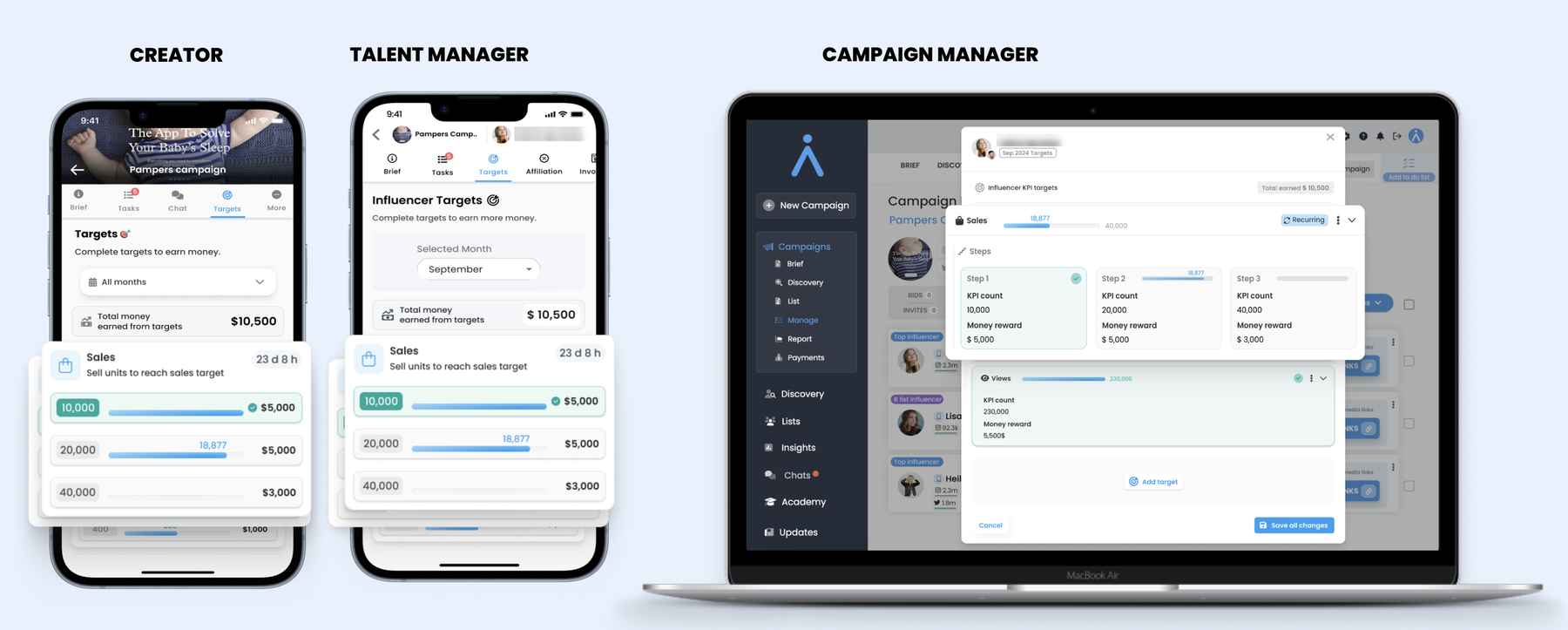
Performance targets set once, and visible to the creator, their manager and your team while there is still time to hit them.
Creator marketing only earns a bigger budget if it lands in the same reports as everything else you spend money on.
Push creator content straight into Meta and TikTok as ads that run from the creator's own profile rather than your brand account — same creative, but a handle the audience already follows. Rights and whitelisting are handled in the platform, so nothing waits on an email thread.
Connect your stores, your marketplaces and your app, and creator activity is followed through to purchases rather than stopping at clicks. The Humanz pixel installs through Google Tag Manager, so your developers are not in the critical path.
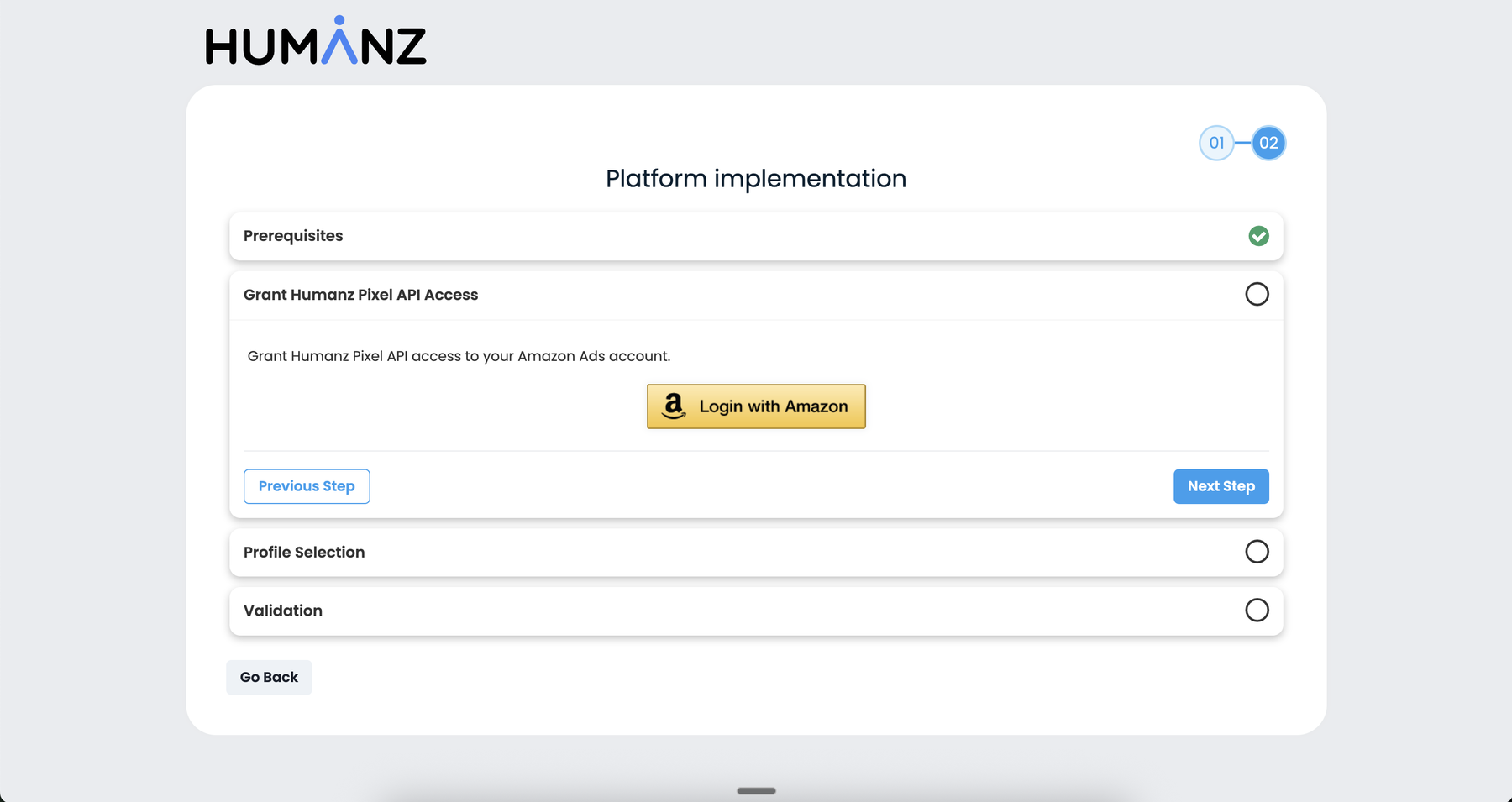
Setup is a wizard, not a project. Grant access, pick the profile, validate.
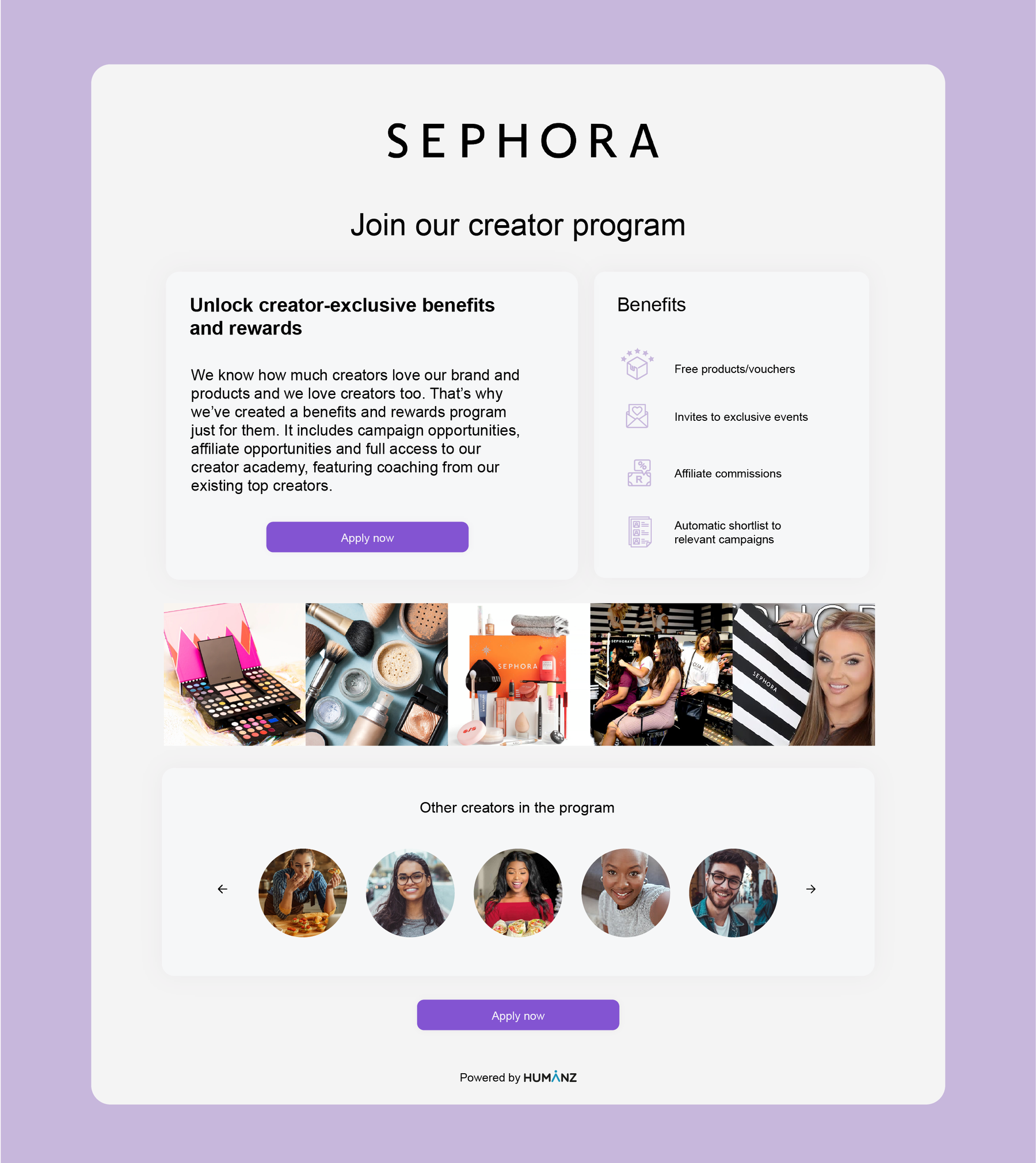
Your best advocates are usually already buying from you. They just have nowhere obvious to put their hand up.
First Aid Beauty had strong products and a TikTok Shop that wasn't growing, with Q4 approaching. Rather than adding a few more creators, we recruited hundreds of them in under 90 days and put them into a weekly loop: test creative, keep what converts, brief the next week from what won. That loop is the engine — not the individual posts.
Then we measured what those audiences did across TikTok, Amazon and Shopify — and found that many of them never bought on TikTok at all. They went straight to their preferred store instead, and some first-time TikTok buyers became high-value repeat customers elsewhere.
Judged on its own numbers, the channel looked ordinary. Judged on all of them, it was carrying the quarter. Which is the difference a compounding engine makes: a loop that gets sharper every week, measured across every place the customer might actually buy.

How the weekly loop was built, and what the cross-channel data turned up once it was running.
We'll show you how the attribution would work, and what your creators are actually worth.
Shopify, TikTok Shop, Amazon, AppsFlyer and Adjust. Available in 30+ markets.